
Last week, we explored how the relationship between procurement and accounts payable (AP) is undergoing a profound transformation. What was once viewed as a transactional, back-office function is rapidly becoming a strategic engine for cost control, risk reduction, and organizational agility. As businesses face increasing economic uncertainty, rising compliance requirements, global supply chain disruption, and growing pressure to do more with fewer resources, the integration of procurement and AP through an intelligent intake-to-pay framework has emerged as a major competitive advantage. Today, we conclude our deeper look into unified orchestration and how it is redefining procurement, AP, and financial control with insights from Ardent Partners and Zip during their recent webcast “Uniting Intake-to-Pay to Drive 2026 Performance.”
Intake as the Front Door to Procurement
For many years, procurement and AP evolved along separate tracks. While both functions touched the same transactions, they often operated on different systems with limited data sharing and minimal collaboration. This separation created a performance gap that modern organizations can no longer afford. One of the clearest signs of this gap is the persistent problem of invoice exceptions. Despite substantial investments in AP automation, invoice exceptions continue to consume disproportionate time and resources. AP teams still spend significant effort chasing missing approvals, resolving mismatches, validating supplier data, and clarifying purchase intent. The core issue is that many of these problems originate long before the invoice arrives. They begin upstream, during the initial request and approval stages.
This is why the concept of intake as the front door to procurement has become so strategically important. Every transaction starts with a request. That request sets the tone for everything that follows, including approvals, purchase orders, invoice matching, and payment timing. If the request is incomplete, inconsistent, or routed outside formal controls, the downstream process inherits those weaknesses. What begins as a simple omission in intake often snowballs into costly delays, disputes, and compliance risks later. A connected intake-to-pay system solves this by treating the process as a single lifecycle rather than isolated functional steps. Instead of separate systems for request intake, approvals, procurement workflows, and invoice management, the organization operates on one connected flow. Every action, from initial request through supplier payment, is linked through shared data and common visibility. This eliminates silos and enables teams to work from a single source of truth.
The strategic benefits are substantial. First, organizations achieve faster cycle times. When intake data is structured and validated early, approvals move faster, purchase orders are more accurate, and invoices match more cleanly. Second, risk is significantly reduced. Policy controls, budget checks, and supplier validations can be embedded directly into the workflow, preventing issues before they occur. Third, compliance improves because every transaction includes a full audit trail from start to finish.
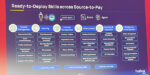
One Continuous Flow
Artificial intelligence further amplifies these gains. Rather than simply accelerating individual tasks, AI enables intelligent orchestration across the entire lifecycle. AI agents can validate request data, extract information from supporting documents, compare transactions against historical patterns, flag anomalies, and even guide users through policy-compliant submission paths in real time. This shifts organizations from reactive remediation to proactive control. The role of AI becomes especially powerful when combined with governance-first design. Modern AI systems, particularly agentic models, are highly capable but probabilistic by nature. This means they require strong process frameworks and structured data environments to operate reliably. High-volume financial processes, such as invoice approvals and payments, demand consistency, low failure rates, and strict control. Without embedded governance, AI cannot deliver its full value safely.
This is why governance is no longer just a compliance function. It becomes the foundational layer of process design. Policies, thresholds, approvals, and validations must be built directly into the system architecture. In this model, governance is proactive rather than reactive. It happens at the point of request, not after a problem has already surfaced in AP.
Another critical benefit is scalability. Procurement and AP leaders are under constant pressure to manage higher transaction volumes without proportional increases in headcount. A unified intake-to-pay model makes this possible. By reducing exception rates, automating validations, and enabling straight-through processing, organizations can scale transaction volumes efficiently while redeploying human talent toward strategic work. This shift is particularly important for AP. Historically viewed as a transaction-processing function, AP is increasingly becoming a strategic contributor to cash management and financial performance. Payment timing directly affects working capital, supplier relationships, and margin performance. In a higher-interest-rate environment, the ability to optimize payment timing has a meaningful bottom-line impact. Better visibility into commitments and liabilities allows AP to support treasury and CFO priorities more effectively.
Supplier experience is another often overlooked strategic dimension. Suppliers care deeply about clarity, predictability, and timely payment. When procurement and AP operate in disconnected environments, suppliers encounter confusion, delayed responses, and repeated follow-ups. A connected system improves supplier trust through consistent communication, faster issue resolution, and predictable payment cycles. This strengthens long-term relationships and can improve supplier responsiveness during times of market volatility. The future of procurement and AP lies in unified orchestration. Organizations that lead in the coming years will be those that move beyond incremental automation and embrace a holistic redesign of their operating model. By connecting intake, governance, procurement, AP, and AI-driven intelligence into one continuous flow, businesses can unlock faster processes, stronger controls, better supplier relationships, and greater strategic value.